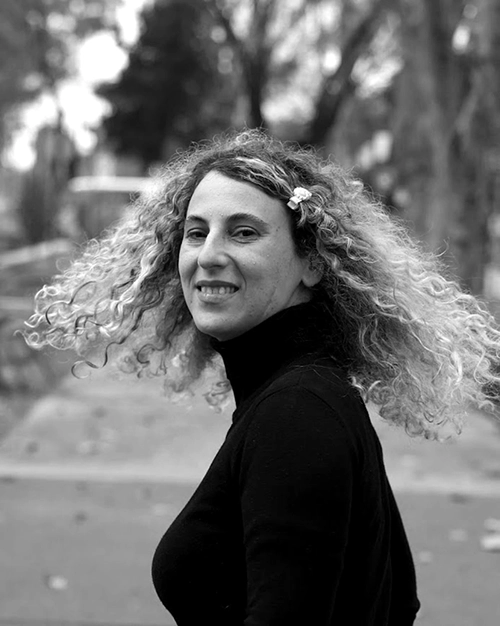
Delfina Korn – writer and journalist.
She has published the short story collections *Prefiero morir de amor* (Bombal, 2022), *Luna de miel* (Cuentos María Susana, 2020), and *Aguas compartidas* (Griselda García Editora, 2019), as well as the novel *El Yanqui* (Mansalva, 2021)—a finalist among the top ten works in the second edition of the “Sara Gallardo” National Novel Prize. She has also published chronicles and interviews in various media outlets, including *Clarín* and *La Nación*.
She has been facilitating literary workshops since 2022 and serves as a teaching assistant in the Journalism program at the University of Palermo.
- How do I sign up?
To register, please write to [email address] or send a message to 1161028800.
Your spot is secured once half of the first installment has been paid and the proof of payment has been sent to the aforementioned email address or WhatsApp number.
Bank account details for the transfer:
Delfina Paula Korn
Banco Galicia
DU: 33248244
Account (CTA): 4017601-1 017-8
CBU: 0070017730004017601185
CUIL: 27332482446
Alias: RACIMO.REINA.CAJA
The course begins on Thursday, August 20th, at 10:00 AM – Facilitated by Delfina Korn.
“Writing an autobiography is not about recounting one’s life, but rather about exploring—through writing—a turning point. That turning point is what motivates the act of writing”. (I. Acevedo).
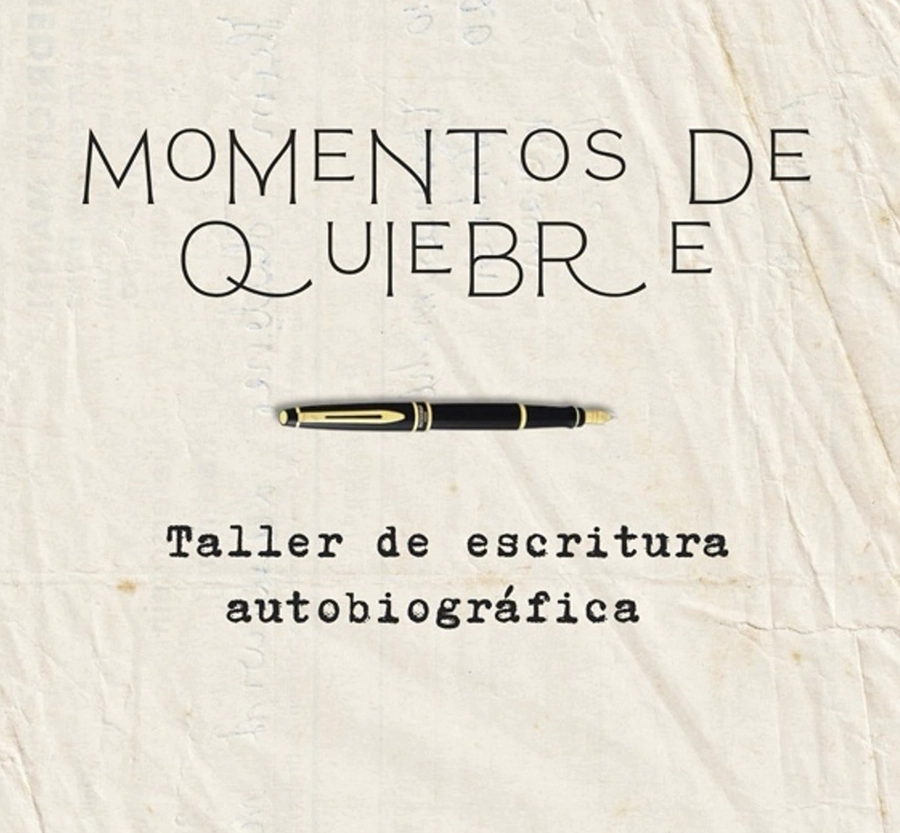
Based on this concept, the workshop “Turning Points” (*Momentos de quiebre*) was created—a space to explore autobiographical writing.
- What is the workshop about?
Through readings, prompts, and writing exercises, this workshop aims to inspire participants to view their own lives through a literary lens—to reflect on their own “turning points” and consider how these moments can be used to craft fiction.
- What are “turning points”?
Events, experiences, or processes after which one can never be the same again. They carry an element of irreversibility.
Some of the questions we will explore include: How do changes impact us? What effects does the passage of time have? What is a person like after a loss—and how do they change twenty years later?
- How does the workshop work?
Each week, participants receive a text to read at home, along with a writing prompt.
During class, we discuss the assigned reading and share what has been written. Feedback is provided orally during the sessions.
We also engage in in-class writing exercises. - Who is it for?
This workshop is designed both for those who already write and for those looking to start from scratch. - When and where?
The workshop will take place on Thursdays at 10:00 AM at the Club Francés (Rodríguez Peña 1832). It meets weekly.
Each session lasts between two and three hours, depending on the number of participants and the texts they bring.
The workshop begins on August 20th. - How much is it?
The workshop costs $80,000 per month.
Club members will receive a 10% discount.
- Workshop reading program:
“Cómo vuelvo” (How I Return), by Hebe Uhart.
Theme: An experience in a new environment alters how we perceive our own world.“Lotería en Marte” (Lottery on Mars), by Liliana Colanzi.
Theme: The end of a relationship ejects us to another planet.“Recorre los campos azules” (Walk the Blue Fields), by Claire Keegan.
Theme: Renouncing love in the name of ideals.“El sol, la luna y las estrellas” (The Sun, the Moon, the Stars), by Junot Díaz.
Theme: The irreversibility of the consequences of our actions.“La madre” (The Mother), by Natalia Ginzburg.
Theme: When change emerges from what remains unchanged.“La funcionaria lingüista” (The Linguist Official), by Alfredo Bryce Echeñique.
Theme: When the familiar turns foreign.“La gacela” (The Gazelle), by Rubem Fonseca.
Theme: Unfulfilled desires.“Las dos de la tarde del domingo” (Two O’Clock on Sunday Afternoon), by Rubem Braga.
Theme: A single moment that marks us forever.- Theoretical readings:
“No cualquiera puede escribir una autobiografía” (Not Anyone Can Write an Autobiography), by I. Acevedo.
“Explicación falsa de mis cuentos” (False Explanation of My Stories), by Felisberto Hernández.
“Tips de escritura, la improvisación de un decálogo” (Writing Tips: The Improvisation of a Decalogue), notes taken by I. Acevedo from a talk by Hebe Uhart.
“Hebe: punto de vista e iluminación” (Hebe: Point of View and Illumination), by Lucía Tebaldi.
- Theoretical readings: