History of Our Club
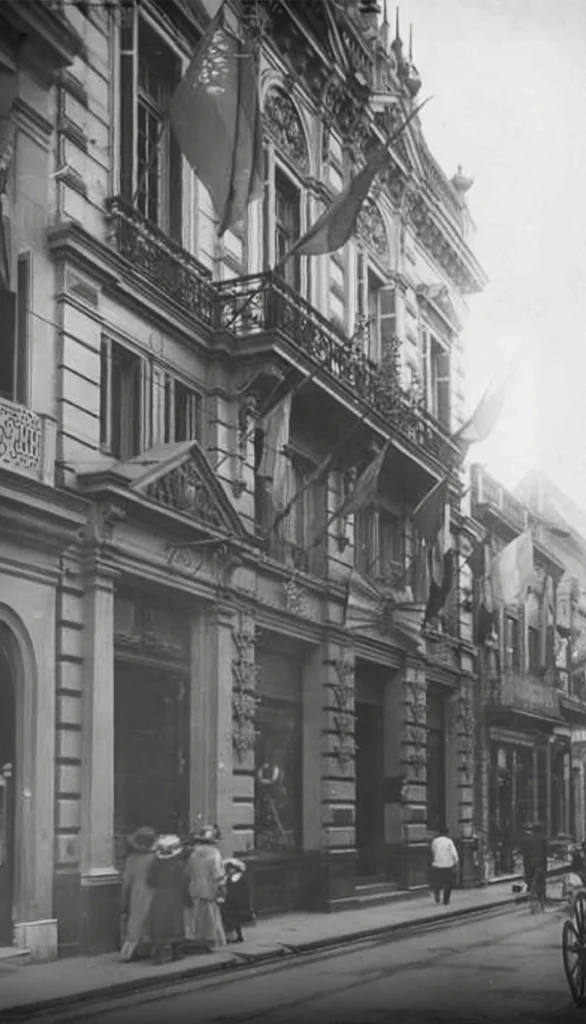
July 14th Celebration, 1922
Founded on May 20, 1866, at the historic Café Malakoff, the Club Francés de Buenos Aires is the oldest among the major French institutions still in existence in Argentina, predating both the Franco-Argentine Chamber of Commerce and Industry (1884) and the Alliance Française de Buenos Aires (1893). This uninterrupted historical continuity also places it among the oldest active community institutional clubs in the country, granting it a unique place in Argentine social and cultural history.
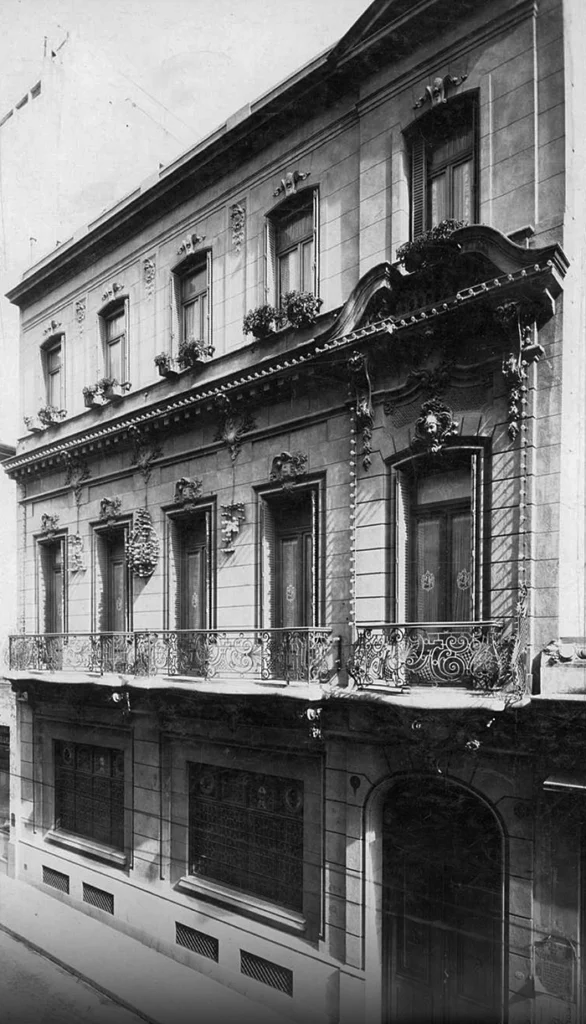
In 1866, in a city of around 170,000 residents—including approximately 21,957 Italians and 13,998 Spaniards—there was nearly an equal French presence, totaling 13,408, when a group among them gathered at Café Malakoff and founded the Club Francés on May 20.
Bartolomé Mitre had been presiding over Argentina for four years as the first president of a unified nation following the Battle of Pavón and the agreements between the president and Urquiza, and it had been one year since the outbreak of the War of the Triple Alliance, triggered by the Paraguayan army’s invasion of Corrientes under Francisco Solano López.
The founding Board of Directors, which laid the groundwork for an institution now celebrating its 160th anniversary, comprised Mr. Pedro A. Sallano as President, Mr. Severino Lalanne as Secretary, Mr. Louia Carrere as Treasurer, and Board Members Juan Bautista Bonnement, Juan Bautista Hiriart, Jean Elisathe-Chevalier, and Louis Logegaray.
Among its members and Board Directors were the urban planner of the city of La Plata, the founder of the Alliance Française, and the architect of the Luján Basilica, alongside many distinguished members spanning various professions, businesses, educators, and intellectuals. Notably, President Carlos Pellegrini was also a board member and established the tradition of jointly celebrating the national holidays of both nations: Argentina’s July 9th and France’s July 14th.
From its origins, the Club has belonged to the great tradition of 19th-century European circles established as hubs for enlightened sociability, intellectual exchange, and institutional representation. It was not conceived merely as a meeting spot, but as an institution designed to bring together the most prominent figures of the French community and Argentine society within a framework of elegance, discretion, and high cultural standards.
The Club’s history is intertwined with that of modern Argentina, deeply shaped by French influence in education, science, architecture, law, and the arts. Architects such as Carlos (Charles) Thays, physicians and scientists like Joseph Linières, intellectuals like Paul Groussac, alongside French and Argentine diplomats, entrepreneurs, and educators, found in the Club a natural space for meeting, reflection, and dialogue.
This prestige is reflected in the presence of two Presidents of the Argentine Nation among its members—Carlos Pellegrini and José Figueroa Alcorta—as well as visits from renowned foreign dignitaries. Among them stands out the French statesman Georges Clemenceau—a central figure of the First World War—who left a record of his time at the Club by sending a painting depicting Vercingetorix, a symbol of French history and spirit; the work is now part of the institution’s artistic heritage.
A lo largo de más de un siglo y medio, el Club Francés ha desempeñado un papel discreto pero esencial en la diplomacia cultural francesa en la Argentina, manteniendo un vínculo constante y fecundo con la Embajada de Francia y actuando como un verdadero puente entre la comunidad francesa, los numerosos argentinos francófilos y las instituciones culturales de ambos países. Across its halls, generations of diplomats, intellectuals, artists, and scholars have crossed paths—often far from formal protocol, yet with a widely recognized historical influence.
Since 1941, the Club has been located at its headquarters on Rodríguez Peña 1832, an emblematic building that houses not only the institution’s social life, but also a remarkable artistic heritage, a historically rich library, and venues dedicated to lectures, cultural activities, and gatherings.
Figures such as Antoine de Saint-Exupéry, Jean Mermoz, Adrienne Bolland, and André Malraux, among others, are part of the Club’s collective memory.
A special place is held by the Fencing Hall, a living expression of a tradition deeply rooted in French culture. Established and led for years by Maître Edward Gardère, a French Olympic champion, the hall became a true center of excellence and a transmitter of values that extend beyond athletic practice: rigor, elegance, discipline, and respect for tradition.
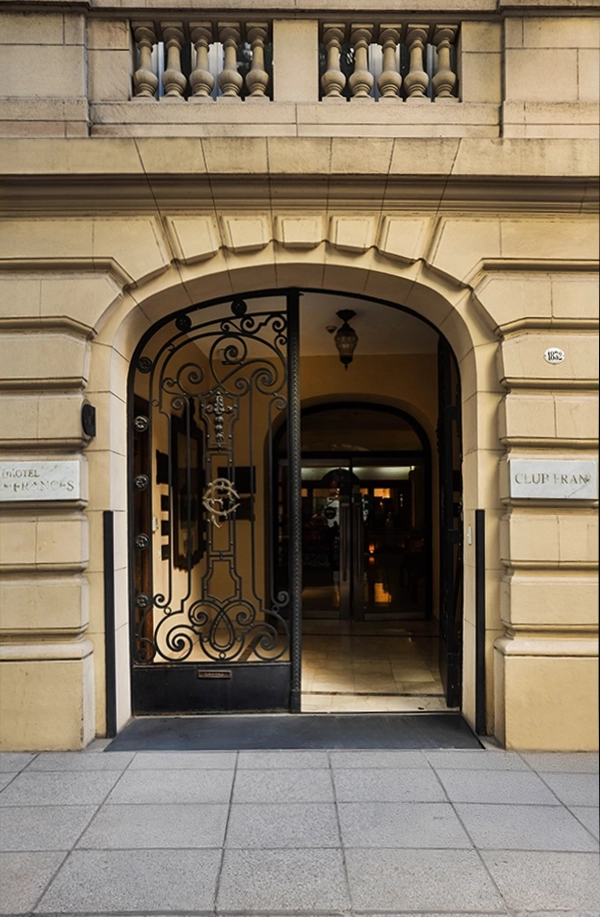
Today, the Club Francés de Buenos Aires brings together around 240 members and is experiencing a period of renewed vitality, driven by the current Board of Directors—chaired by Roberto Azaretto—which has reaffirmed the institution’s historical calling while strengthening its cultural reach and institutional visibility, in close collaboration with the Embassy of France.
The Club Francés de Buenos Aires is a separate institution from the Hotel Club Francés. Although both entities are partners and share the building’s halls, they have clearly distinct natures and missions: the Club is a historical and cultural members’ association; the Hotel is a hospitality establishment operating independently.
Through periods of prosperity as well as times of hardship, much like nations themselves face, the Club Francés has overcome difficult times and stands proud, fulfilling its role as an essential pillar of French culture in our country—a culture it has so deeply influenced. Today, it continues to be a landmark venue, where French-Argentine history is not merely displayed—it is lived.
Distinguished figures: members and visitors
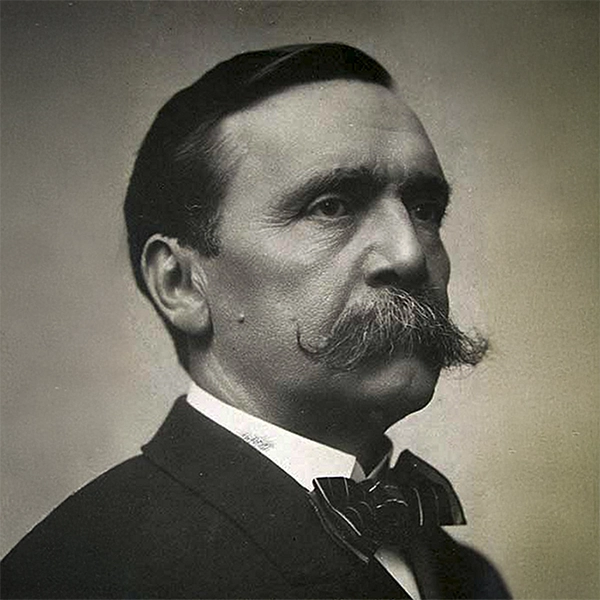
Carlos Pellegrini
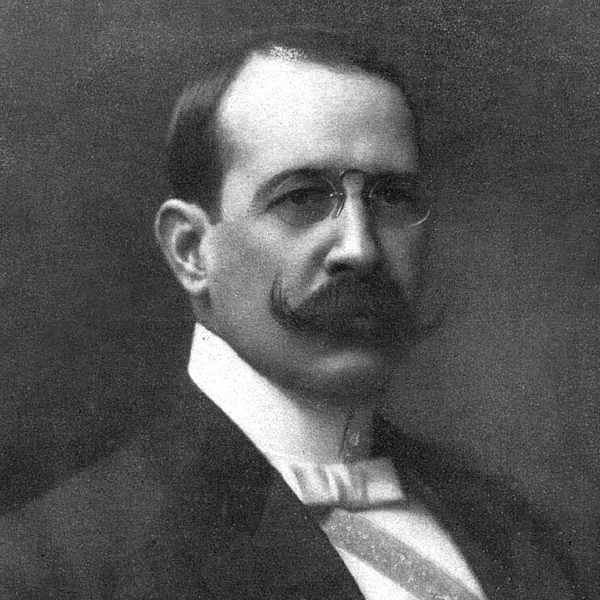
José Figueroa Alcorta
Since the 19th century, the Club Francés de Buenos Aires has been a community hub and an essential gathering place for figures who shaped the political, intellectual, and cultural history of both Argentina and France.
Prominent Members:
Among the Club’s members were two Presidents of the Argentine Nation:
— Carlos Pellegrini, a key figure in the country’s institutional modernization,
— José Figueroa Alcorta, President and later Chief Justice of the Supreme Court.
The Club also brought together French diplomats, scientists, engineers, educators, and business leaders instrumental in the development of modern Argentina—many of whom played leading roles in the economic, technical, and cultural exchanges between both nations in the late 19th and early 20th centuries.
Illustrious Visitors
Throughout its history, the Club welcomed numerous French and international dignitaries, including:
— Georges Clemenceau, a major figure in French political life and architect of the Allied victory in World War I,
— Paul Groussac, a French-Argentine intellectual and Director of the National Library,
— Carlos (Charles) Thays, landscape architect and urban planner,
— Antoine de Saint-Exupéry, writer and aviator,
— Jean Mermoz and Adrienne Bolland, pioneers of French aviation in South America,
— André Malraux, writer and French Minister of Culture.
These notable visits reaffirm the Club’s role as a space for distinguished sociability, defined by discretion, continuity, and the high caliber of its exchanges.